
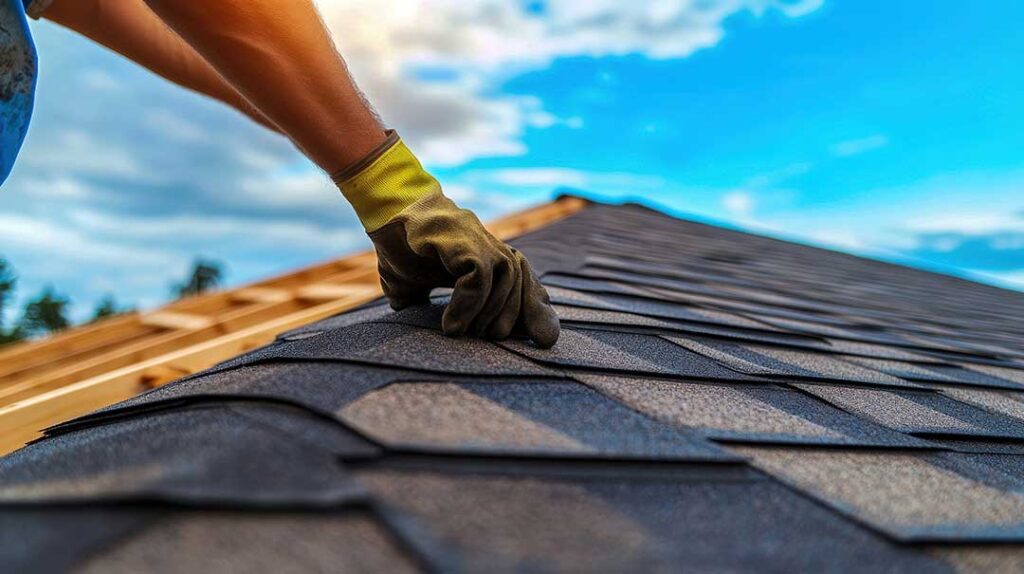
Hail can damage roofing without creating an immediate leak. After a strong thunderstorm, the most useful approach is to look for impact marks on shingles, metal components, siding, gutters, and nearby outdoor surfaces while avoiding unsafe roof access.
What does hail damage look like on asphalt shingles?
Hail damage on asphalt shingles often appears as small, irregular dents where the impact has displaced granules or damaged the shingle’s underlying mat. The affected area may look darker, smoother, or slightly depressed than the surrounding surface.
Common signs include:
- Bare spots where roofing granules have been knocked away
- Round or oval dents in the shingle surface
- Soft or spongy areas beneath the outer coating
- Cracks, splits, or punctures
- Exposed black asphalt or fiberglass mat
- Small areas where the shingle surface appears bruised
A genuine hail bruise may not look dramatic from the ground. It can be easier to identify by viewing the roof from several angles in daylight. Fresh granule loss may also collect in gutters or at the bottom of downspouts, although granules naturally shed as shingles age, so this clue must be considered alongside other evidence.
Can hail damage a roof without causing a leak?
Yes. Many hail impacts weaken shingles without creating an opening that immediately allows water into the attic or living space. The damaged area may gradually deteriorate after repeated rain, snow, freezing temperatures, and summer heat.
A roof can have storm damage even when:
- Ceilings and walls look dry
- No dripping is visible in the attic
- Shingles are still attached
- The roof looks acceptable from the driveway
- The storm included only brief hail
Water intrusion may appear later around ceiling fixtures, attic insulation, roof penetrations, or upper-floor walls. A delayed leak does not necessarily mean the damage occurred recently, so documenting the roof’s condition after a storm can be useful.
Which roof components should be checked besides shingles?
Hail strikes more than the shingle field. Metal and exposed components often show impact marks more clearly than the shingles themselves.
Look at these areas from the ground or from a safe location:
- Metal roof vents and flashing
- Gutters and downspouts
- Chimney caps and metal chimney flashing
- Drip edges
- Skylight frames
- Air-conditioning equipment
- Painted siding, window trim, and exterior doors
- Fences, decks, vehicles, and other exposed surfaces
Dents in soft metal can support the possibility that hail reached the property. However, dents alone do not prove that the roof shingles are damaged. The direction of the storm, the angle of the roof, the age of the materials, and the size and hardness of the hail all affect the result.
How can hail damage be distinguished from normal roof wear?
Normal aging and hail damage can look similar, but they usually have different patterns. Weathered shingles may lose granules broadly across the roof, curl at the edges, become brittle, or show cracking along repeated exposure lines.
Hail damage is more likely to appear as localized impact points. It may be scattered across one or more roof slopes, with noticeable marks on vents, flashing, or other exposed surfaces.
Possible signs of ordinary wear include:
- Uniform fading across large sections
- Granule loss concentrated near drainage paths
- Curling or lifting caused by age
- Cracks that follow the shingle’s length
- Algae staining or moss growth
- Damage limited to poorly maintained or previously weakened areas
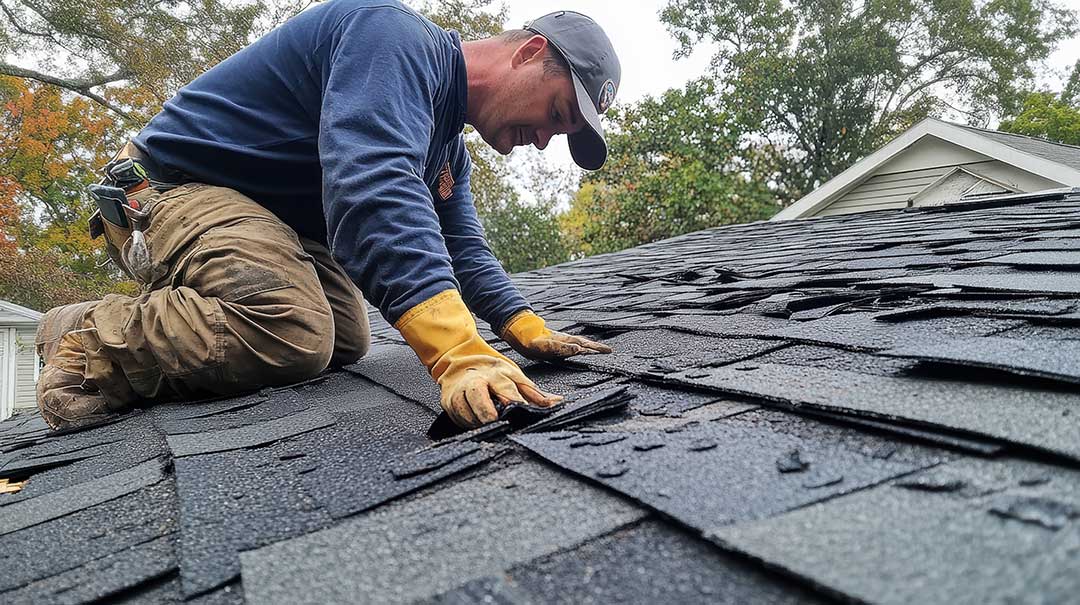
Foot traffic can also leave dents, scuffs, and broken granules. Branches may create long scratches or concentrated gouges rather than the rounded bruises commonly associated with hail. Because several forms of damage can overlap, a close inspection may be needed to separate storm impacts from age, installation problems, and maintenance issues.
What should homeowners check inside the house?
Interior inspection is useful, but the absence of indoor damage does not clear the roof. Check the attic and upper floors after a storm, especially if the property experienced strong wind or hail.
Look for:
- Damp insulation
- Water stains on roof decking or rafters
- Darkened wood
- Drips around vents, chimneys, or skylights
- Peeling paint or bubbling drywall
- Musty odors
- Dampness near ceiling penetrations
Use caution around electrical fixtures and wet insulation. If water is actively entering the home, placing a container beneath the drip may limit damage temporarily, but climbing onto the roof during rain, wind, or icy conditions creates additional risk.
Is it safe to inspect the roof personally?
A ground-level inspection is generally safer than climbing onto a roof. Hail can make shingles slippery, and roof surfaces may be steep, wet, brittle, or weakened even when the damage is not obvious.
From the ground, use binoculars or a phone camera with optical zoom to inspect roof edges, vents, ridge caps, and visible slopes. Do not walk on the roof simply to confirm a suspected mark. Avoid ladders during wet weather, strong winds, or when the ground is unstable.
A qualified roof inspector may be necessary when the roof is steep, difficult to access, more than one story high, or visibly damaged. This is especially true when there are loose shingles, exposed decking, sagging areas, electrical hazards, or active leaks.
Why does local weather matter in Gouverneur?
Seasonal weather can make roof damage harder to recognize. In Gouverneur, roofs may face repeated cycles of rain, snow, ice, freezing temperatures, thawing, and strong summer thunderstorms. These conditions can obscure impact marks, wash loose granules into drainage systems, or worsen a small defect before a leak becomes visible.
Snow and ice can also hide damage for part of the year. After a storm, the clearest inspection opportunity may come once the roof surface is dry and safely visible. Wind-driven hail may affect one roof slope more heavily than another, depending on the storm’s direction.
A record of the storm date, photographs of visible damage, and notes about interior moisture can help establish a timeline. It is useful to photograph both close-up marks and wider views showing where the damage appears on the roof.
What should be done after suspected hail damage?
Start by documenting conditions without disturbing the roof. Photograph damaged shingles, dents in metal components, granules in gutters, damaged siding, and any interior staining. Note the approximate date of the storm and whether hail, high wind, or falling branches were observed.
Temporary measures may be appropriate if there is an active opening or leak, but they should not involve unsafe roof access. A temporary cover must be secured properly and kept away from chimneys, electrical equipment, and other hazards.
Insurance coverage depends on the policy, the cause of damage, the roof’s age, maintenance history, deductible, and the terms in effect on the date of the storm. A hail event does not automatically mean that roof replacement is necessary. Some impacts may require limited repairs, while widespread or functionally significant damage may involve more extensive work.
The most reliable determination comes from examining the entire roof system rather than relying on a single dent or a few missing granules.
