
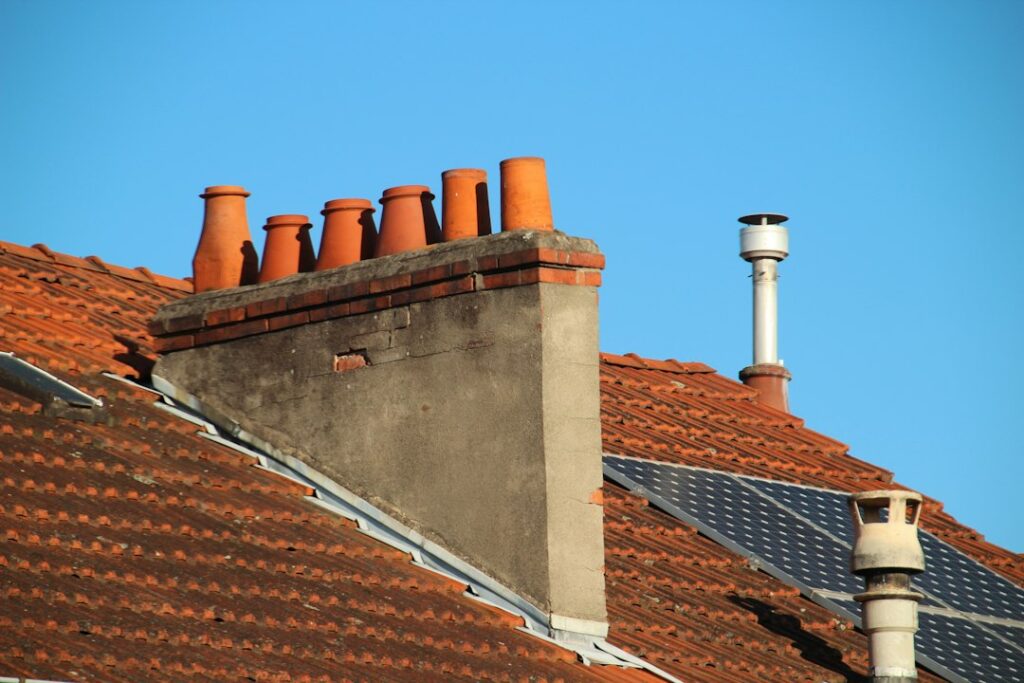
Roof flashing is the thin, shaped material installed around roof openings, edges, joints, and changes in roof direction. Its job is to guide water away from vulnerable areas so rain and melting snow do not seep beneath shingles or into the structure.
A roof may appear covered from edge to edge, but many leaks begin where two surfaces meet. Flashing helps seal and redirect water at those transition points.
What does roof flashing do?
Roof flashing creates a water-shedding barrier at places where roofing materials alone cannot provide dependable protection. It is commonly installed around chimneys, plumbing vents, skylights, wall intersections, valleys, roof edges, and other penetrations.
The material is usually formed from corrosion-resistant metal, although some systems use flexible membranes or specially manufactured components. Flashing is shaped to fit the location and layered with surrounding roofing materials so water flows over the surface rather than behind it.
Flashing does not usually stop water through adhesive alone. Proper installation depends on overlapping layers, correct positioning, secure attachment, and compatible roofing materials.
Where is flashing found on a roof?
Flashing can be found in several forms, and each type serves a different purpose.
- Step flashing: Small pieces installed along the side of a wall or chimney, typically woven between roofing courses and siding or masonry.
- Counterflashing: A second layer, often cut into masonry or attached to a wall, that covers the upper edge of base flashing.
- Apron flashing: A larger piece placed at the lower side of a chimney, wall, or other vertical feature.
- Valley flashing: Material installed where two roof slopes meet and collect water.
- Pipe flashing: A shaped boot that seals around plumbing vent pipes.
- Drip edge flashing: A metal edge component that directs water away from the roof deck and fascia.
- Headwall flashing: Flashing installed where a sloped roof meets a vertical wall.
- Chimney flashing: A system of base flashing, counterflashing, and sometimes cricket flashing designed to protect the area around a chimney.
- Kick-out flashing: A small diverter that pushes water away from the side of a wall and into the gutter or away from the siding.
Some flashing is visible, while other parts are concealed beneath shingles, siding, mortar, or trim.
Why does flashing matter in Gouverneur, NY?
The roof systems on homes in Gouverneur must deal with repeated wetting, freezing, thawing, snow, and wind. Those conditions can expose weak points in flashing, especially where materials expand and contract at different rates.
Ice and snow may also remain near roof edges, valleys, chimneys, and wall intersections. As temperatures change, water can move into small gaps or behind deteriorated flashing. Once moisture reaches the roof deck, framing, insulation, or interior finishes, the visible damage may appear far from the original entry point.
Older homes may have several generations of repairs layered over one another. A roof replacement can also leave existing flashing in place, even when the surrounding shingles are new. This is one reason a roof can look recently updated while still having vulnerable areas.
What are the signs of damaged or failing flashing?
Flashing problems do not always produce an immediate ceiling stain. Early warning signs may appear outside or in attic spaces.
Look for:
- Rust, corrosion, holes, or visibly cracked metal
- Loose sections or flashing that has pulled away from a wall
- Missing pieces around chimneys, vents, or roof edges
- Exposed fasteners or heavy use of roofing cement
- Damaged mortar joints near chimney flashing
- Shingles that curl, lift, or deteriorate near a roof penetration
- Water stains on ceilings or upper walls
- Damp insulation, musty odors, or darkened roof decking
- Peeling paint or swollen trim near a wall intersection
- Gutter overflow caused by incorrectly directed water
A leak may only appear during wind-driven rain or during a thaw after snow has accumulated. The absence of a current stain does not prove that flashing is performing properly.
Can roof flashing be repaired, or does it need to be replaced?
Minor problems can sometimes be corrected, but the appropriate solution depends on the condition of the surrounding materials. A loose piece may be resecured if it is still sound. Small surface corrosion may be treatable in limited circumstances, but corrosion that has created holes generally requires replacement.
Patching over failed flashing is not always a lasting repair. Roofing cement can temporarily cover a gap, but it may crack, separate, or conceal the actual defect. If water is entering behind the flashing, a surface patch may leave the underlying problem untouched.
Replacement is more likely when flashing is badly rusted, bent, cracked, improperly layered, or installed without adequate overlap. Masonry damage, rotten wood, deteriorated siding, or a damaged roof deck may also need attention before new flashing can perform correctly.
Is flashing replaced when a roof is replaced?
Not always. Flashing that is still correctly installed and in good condition may be reusable in some areas, but hidden or difficult-to-access components deserve careful evaluation.

Replacement is commonly considered for:
- Step flashing that is bent, corroded, or buried beneath older roofing
- Pipe boots with cracked rubber or hardened seals
- Drip edges that are missing or poorly aligned
- Chimney flashing with open joints or damaged counterflashing
- Valley areas with corrosion or improper water flow
- Wall flashing that does not extend correctly behind the weather-resistant barrier
A new layer of shingles cannot compensate for flashing that is incorrectly positioned underneath. The flashing and roofing should be treated as one water-management system.
What common mistakes cause flashing leaks?
Many flashing failures result from installation details rather than the material itself. Common examples include using too few layers, placing fasteners where water can collect, sealing over a drainage path, or failing to extend flashing behind adjacent siding or masonry.
Other problems include:
- Covering step flashing with siding instead of integrating it correctly
- Installing pipe flashing over a damaged or uneven roof surface
- Relying on caulk as the primary waterproofing method
- Allowing a roof valley to collect debris and restrict drainage
- Directing water from a roof section behind siding
- Leaving gaps where flashing meets gutters, walls, or chimneys
- Mixing incompatible metals that can accelerate corrosion
Flashing should shed water by design. Sealants may assist the system, but they should not be expected to replace proper overlap and drainage.
Can homeowners inspect flashing safely?
A ground-level inspection can reveal obvious concerns, such as missing metal, heavy rust, separated trim, or visible gaps around roof penetrations. Binoculars can help examine chimneys, valleys, vent pipes, and roof edges without climbing.
Roof access becomes hazardous when surfaces are wet, icy, snow-covered, steep, or unstable. Chimneys and roof edges can be especially dangerous during seasonal weather changes. Interior checks from an attic or upper room may be safer and can reveal damp insulation, daylight, staining, or mold-like discoloration.
If water is entering living areas, if structural wood appears damaged, or if the roof cannot be safely accessed, evaluation by a qualified roofing professional may be necessary for safety and accurate diagnosis.
How long should roof flashing last?
The service life of flashing depends on its material, exposure, installation quality, roof movement, and maintenance. Metal flashing can remain functional for many years, but it may fail sooner around chimneys, roof valleys, and areas exposed to standing water or ice.
Flashing should be checked after major storms, during roof maintenance, and whenever new stains or moisture odors appear indoors. Keeping valleys and roof drainage paths clear also helps reduce the amount of water and ice pressure placed on these components.
A well-designed flashing system is easy to overlook because it is often hidden. Its value becomes most apparent when it keeps rain, melting snow, and runoff outside the building where they belong.
