
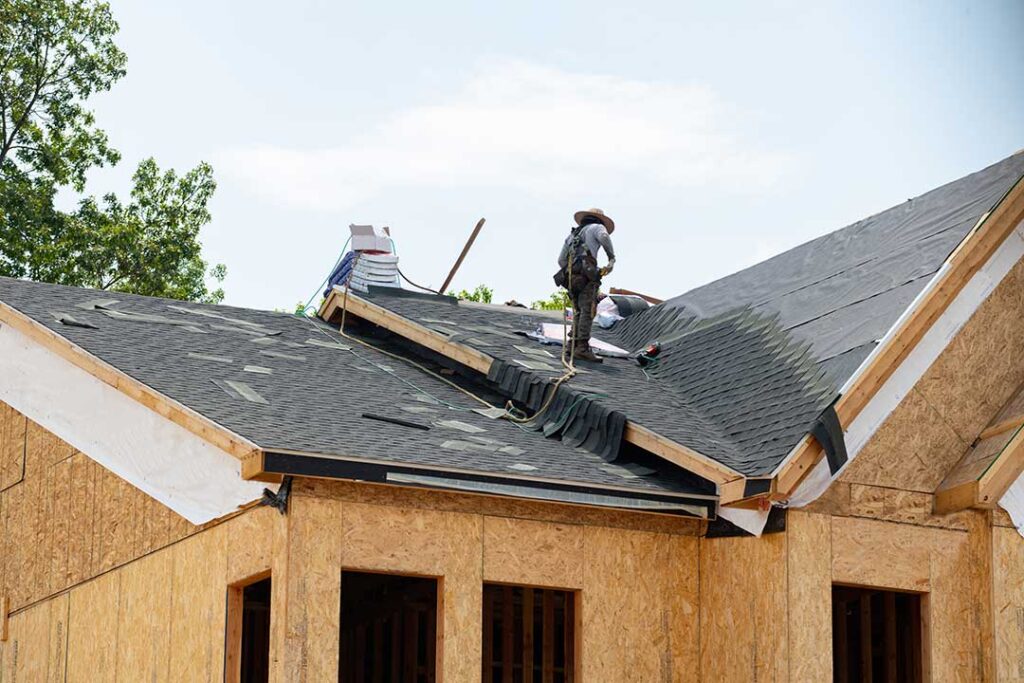
Why roof debris should be removed carefully
For homeowners in Gouverneur, NY, roof debris can accumulate after wind, heavy snow, ice, spring thaw, and nearby tree growth. Leaves, twigs, pine needles, moss, and branches may seem harmless, but they can hold moisture against roofing materials, block drainage, and conceal damage.
The safest approach depends on the type and amount of debris, the roof’s slope, the weather, and the condition of the roofing system. Light debris on a low-slope roof may be manageable from a safe position. A steep, wet, icy, or visibly damaged roof creates a much higher risk and should not be treated as a routine household task.
What debris commonly collects on local roofs?
Roof debris varies by season and by the trees and buildings surrounding a home. Common materials include:
- Leaves and small branches after autumn winds
- Pine needles that settle around roof valleys and chimneys
- Heavy limbs or broken tree sections after storms
- Windblown plastic, paper, or other loose materials
- Ice fragments and compacted snow
- Moss, algae, and organic buildup
- Granules from worn asphalt shingles
Leaves and needles are especially likely to gather in valleys, behind chimneys, around skylights, and near roof penetrations. These areas can remain damp longer than exposed sections of the roof, increasing the chance of staining, decay, or blocked water flow.
Should homeowners climb onto the roof?
In many cases, no. Roof work becomes hazardous when the surface is steep, wet, frosty, snow-covered, mossy, or damaged. Gouverneur’s changing seasonal conditions can create slippery surfaces even when the roof appears dry from the ground.
Do not climb onto a roof if:
- Snow, ice, frost, or rain is present
- The roof has a steep pitch or fragile roofing materials
- A ladder cannot be placed on firm, level ground
- The roof shows sagging, missing sections, exposed underlayment, or loose flashing
- Wind is strong enough to move branches or roofing materials
- The debris includes power lines, large limbs, or suspected hazardous materials
A fall from even a single-story roof can cause serious injury. A roof does not need to look particularly high to be dangerous, and ordinary household shoes do not provide reliable protection on sloped roofing.
How can light debris be removed from the ground?
Small amounts of dry leaves, pine needles, and loose twigs can sometimes be removed without stepping onto the roof. A roof rake or soft-bristled extension tool may help, provided it is used gently and from a stable location.
Use the tool with light strokes, working from the lower edge upward only as far as necessary. Avoid aggressive scraping, which can loosen shingle tabs, remove protective granules, or damage metal roofing finishes.
A few precautions make this method safer:
- Keep both feet on stable ground.
- Stay clear of overhead electrical lines.
- Maintain distance from windows, vehicles, and people below.
- Do not pull on branches that are caught under shingles or flashing.
- Stop if the tool snags, the roof surface shifts, or debris appears attached.
Ground-level removal is not suitable for large branches or debris that has become lodged beneath roofing materials. Pulling force can worsen hidden damage.
What tools are appropriate?
The right tool depends on the debris and roofing material. For loose organic material, a roof rake designed for ground-level use or a soft leaf-removal tool is generally less damaging than a metal rake.
Avoid using:
- Sharp garden rakes
- Shovels on shingles
- Pressure washers
- High-pressure hoses
- Knives or other cutting tools
- Long poles used with excessive force
Pressure washing can drive water under shingles, remove granules, damage flashing, and spread debris into gutters or wall surfaces. Metal tools can scratch coated metal panels or tear roofing membranes.
If removal requires a ladder, the ladder must rest on solid, level ground and extend above the access point according to accepted ladder-safety practices. A ladder should never be placed on snow, ice, loose soil, or an unstable surface.
How should large branches and storm debris be handled?
Large limbs should not be dragged across the roof. Their weight may break shingles, bend flashing, damage vents, or worsen a puncture that is not immediately visible.
If a branch has fallen onto the roof, look from the ground for:
- Crushed or displaced shingles
- A sagging roofline
- Damaged gutters or downspouts
- Exposed wood or underlayment
- Broken vents, skylights, or flashing
- Water stains in the attic or upper ceilings
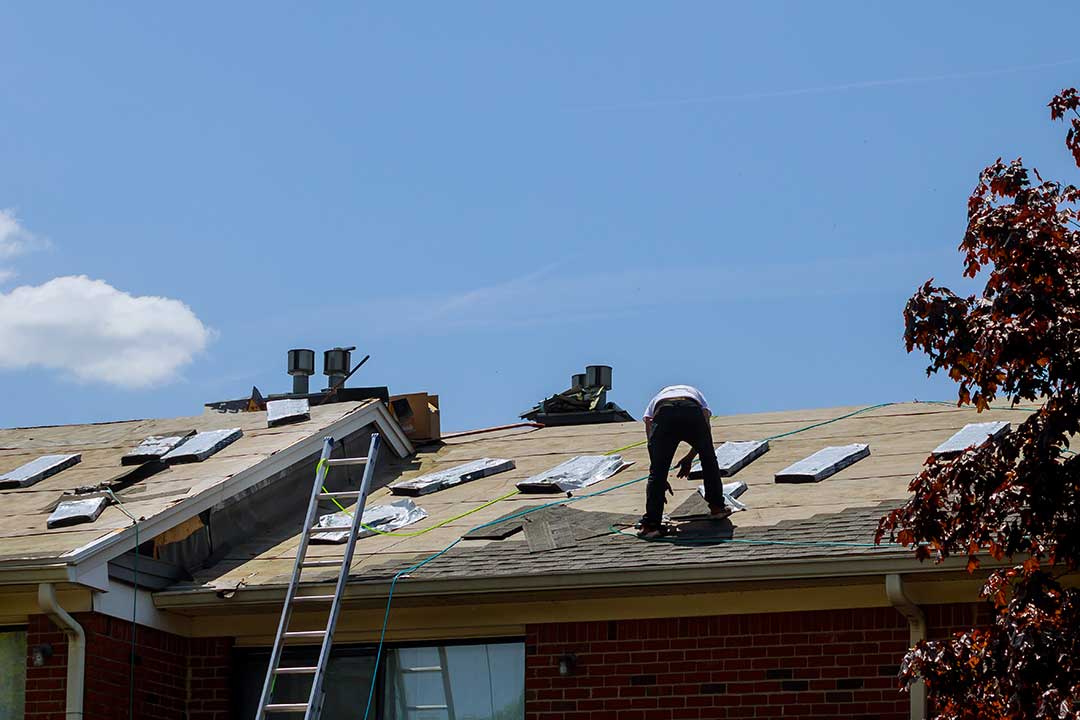
Keep people away from the area beneath the branch until the situation is evaluated. A limb resting on a roof may be under tension, especially if it is caught in another branch, against a chimney, or near a utility line. Debris involving electrical wires requires emergency utility guidance rather than ordinary roof cleanup.
How do gutters and roof valleys affect debris removal?
Roof debris often causes more trouble by blocking water pathways than by sitting on the field of the roof. Valleys direct rain and melting snow toward gutters, so even a small accumulation can create overflow or back up water beneath roofing materials.
Gutters should be checked from a safe position after major debris removal. Look for:
- Packed leaves and sediment
- Standing water
- Loose or sagging gutter sections
- Detached downspouts
- Ice-related movement or damage
- Water spilling behind the gutter
Do not lean a ladder against a gutter, as the gutter may bend or pull away from the fascia. Downspouts should discharge water away from the foundation, but extensions must remain clear of walkways and areas where winter ice could create a hazard.
What should be checked after debris is removed?
Removing debris is only part of the task. Inspect the roof from the ground and, if safely accessible, inspect the attic for signs that water has entered.
Warning signs include:
- Dark ceiling stains
- Damp insulation
- Musty attic odors
- Daylight visible through the roof deck
- Shingle pieces on the ground
- Exposed fasteners
- Rust around flashing or vents
- Persistent gutter overflow
Small shingle granules in gutters can occur as roofing ages, but a sudden increase after a storm may indicate impact or surface deterioration. Moss should not be scraped forcefully from shingles because the removal process can damage the roofing surface. Its presence may also point to persistent shade and moisture that need to be addressed.
How can future debris buildup be reduced?
Routine observation is more useful than waiting for a major accumulation. After windy weather, heavy snowfall, or spring thaw, check the roofline, gutters, valleys, and nearby trees from the ground.
Helpful preventive steps include:
- Keeping loose branches away from the roof where practical
- Watching for trees with dead limbs over the home
- Checking gutters before and after the leaf season
- Keeping attic ventilation and insulation in reasonable condition
- Looking for early signs of leaks after storms
- Removing debris before it becomes wet, compacted, or frozen
For homes surrounded by mature trees, seasonal inspections can reveal problem areas before branches or organic material create drainage issues. Winter debris may also be concealed beneath snow, so visible roof conditions should not be assumed to represent the entire surface.
The basic rule is simple: remove only loose, light debris that can be reached without exposing anyone to a fall or electrical hazard. Large, lodged, frozen, or structurally concerning debris is no longer ordinary cleanup and should be handled with appropriate safety precautions.
